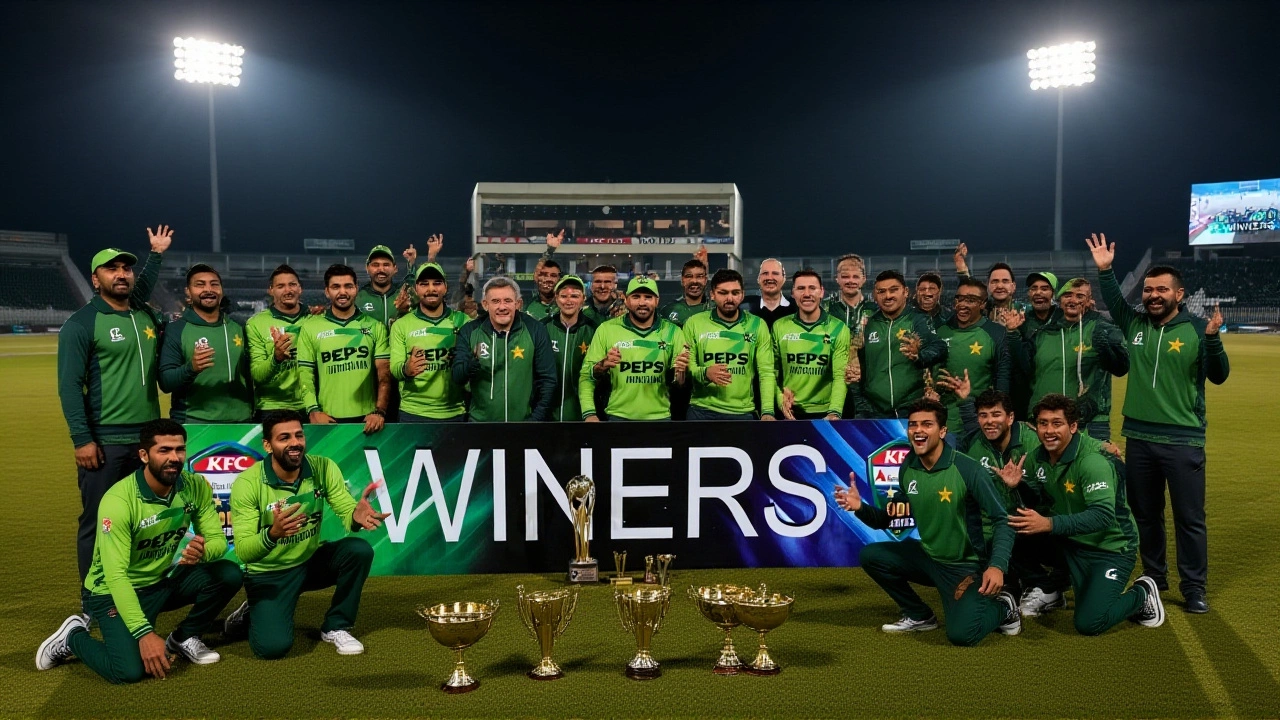
When Sahibzada Farhan stepped up to the crease in the 11th over of Pakistan’s chase, the 2025 Pakistan T20I Tri-Nation SeriesRawalpindi Cricket Stadium was holding its breath. Sri Lanka had posted a modest 128 for 7, and Pakistan’s top order had sputtered. But Farhan didn’t just rescue the innings—he detonated it. His blistering 80 not out off just 45 balls, with 11 fours and 4 sixes, wasn’t just a career-best in T20Is. It was a statement. Pakistan won by 7 wickets with 27 balls to spare on November 22, 2025, turning what looked like a tense chase into a masterclass in controlled aggression.
Rawalpindi Becomes Stage for Cricket’s Quiet Revolution
The Rawalpindi Cricket Stadium, with its 15,000-seat capacity and electric atmosphere, has quietly become one of Asia’s most reliable T20 venues. This match was the third in a six-game double round-robin tournament organized by the Pakistan Cricket Board, with teams from Sri Lanka and Zimbabwe. Originally, Afghanistan was slated to participate—but after their cricket board withdrew on October 17, 2025, citing cross-border tensions, Zimbabwe stepped in. That change alone reshaped the tournament’s dynamics, giving Pakistan two chances to face each opponent instead of one.Farhan’s Fireworks and Nawaz’s Precision
Sri Lanka’s innings was a study in underperformance. Janith Liyanage’s 41 off 38 balls was the only meaningful contribution. The rest of their batting order collapsed under pressure. Mohammad Nawaz, Pakistan’s spin wizard, was the difference-maker: 3 for 16 in 4 overs, including two crucial wickets in the 15th and 17th overs that snuffed out any late surge. His economy rate of 4.00 was the stingiest among all bowlers. Meanwhile, Farhan’s innings was pure theater. He didn’t just hit boundaries—he dictated where they’d come. After Saim Ayub’s quick 20 and Babar Azam’s quiet 16, Farhan took over. He rotated strike with surgical precision, then exploded in the final five overs. When he launched Dushmantha Chameera over long-on for six in the 15th over, the crowd roared. The stadium, already buzzing after security concerns earlier in the week, finally exhaled in celebration.Security Shadows and Tournament Rescheduling
This series almost didn’t happen. After an attack near an Islamabad court complex on November 11, 2025, several Sri Lankan players raised alarms. Sri Lanka Cricket considered pulling out. But after high-level talks between Sri Lanka Cricket, the Pakistan Cricket Board, and local security officials, the tour continued—with enhanced protocols. The opening match, originally set for November 17, was pushed back one day to November 18. The decision wasn’t just logistical; it was symbolic. Cricket, in this region, remains one of the few spaces where diplomacy still happens through bat and ball.What’s Next? The Path to the Final
Pakistan now sits atop the table with 4 points from two wins (over Zimbabwe and Sri Lanka), boasting the best net run rate. Their next challenge? Another clash with Zimbabwe on November 23. Sri Lanka, with one loss and one win against Zimbabwe, must beat them on November 25 to stay alive. The final, set for November 29 at the same stadium, will likely pit Pakistan against either Sri Lanka or Zimbabwe. ESPN’s analysis called Sri Lanka’s campaign “muddled thinking with bat and ball”—a damning verdict for a side once feared for its pace and flair.Why This Matters Beyond the Scoreboard
This isn’t just warm-up for the 2026 Men’s T20 World Cup. It’s a test of resilience. Pakistan’s ability to dominate under pressure, even after political friction and security fears, sends a message: their cricketing DNA remains intact. For Sri Lanka, the questions pile up: Why the constant lineup changes? Why the failure to adapt? And for Zimbabwe, the tournament is a rare chance to prove they belong among Asia’s elite. Farhan’s 80 might be the standout moment, but the real story is the quiet endurance of international cricket in a volatile region.Frequently Asked Questions
How did Sahibzada Farhan’s 80* impact Pakistan’s chances in the tournament?
Farhan’s unbeaten 80 off 45 balls wasn’t just his highest T20I score—it lifted Pakistan’s net run rate significantly, putting them in a commanding position to reach the final. With 4 points from two wins and a +1.85 NRR, he essentially secured their spot in the final with one innings. His ability to accelerate under pressure also eased the burden on the rest of the batting lineup, making Pakistan far more dangerous in crunch moments.
Why was Afghanistan replaced by Zimbabwe in the series?
The Afghanistan Cricket Board withdrew from the tournament on October 17, 2025, citing ongoing cross-border tensions with Pakistan. With no time to find another replacement, the Pakistan Cricket Board invited Zimbabwe, who had recently performed well in regional qualifiers. Zimbabwe’s inclusion added unpredictability to the group, and their narrow loss to Pakistan on November 18 showed they’re no longer just minnows in T20 cricket.
What security measures were taken after the Islamabad attack on November 11, 2025?
Following the attack near an Islamabad court complex, Pakistani authorities deployed additional police and paramilitary personnel around team hotels, stadiums, and travel routes. All Sri Lankan players were assigned personal security escorts during movement. The tournament’s start was delayed by one day to allow for final coordination. No incidents occurred during the matches, and Sri Lanka Cricket publicly thanked Pakistan for the enhanced arrangements.
How does this result affect Sri Lanka’s prospects for the 2026 T20 World Cup?
Sri Lanka’s inconsistent batting and erratic bowling selections in this series raise serious red flags. Their failure to post competitive totals (128 and 112 in two matches) and reliance on a few players like Liyanage suggest a lack of depth. Without urgent fixes to their middle-order stability and spin options, their chances of advancing past the group stage in 2026 look slim—especially with stronger teams like India and Australia in their potential path.
What’s the significance of the Rawalpindi Cricket Stadium hosting all matches?
Hosting all six league games and the final at one venue reduces travel fatigue and logistical complexity, which is critical given the security context. It also allows the Pakistan Cricket Board to maximize crowd control and fan engagement. Rawalpindi’s pitch, known for being balanced with slight assistance for spinners, has proven ideal for T20s—making it a strategic choice ahead of the World Cup.
Who are the likely finalists, and what’s at stake?
Pakistan is the favorite to reach the final on November 29, given their superior net run rate and batting firepower. Their likely opponent is either Sri Lanka or Zimbabwe, depending on the outcome of their November 25 clash. The final isn’t just about pride—it’s a confidence builder for the 2026 T20 World Cup. Winning here could cement Pakistan’s status as title contenders, while a loss might expose lingering fragility under pressure.